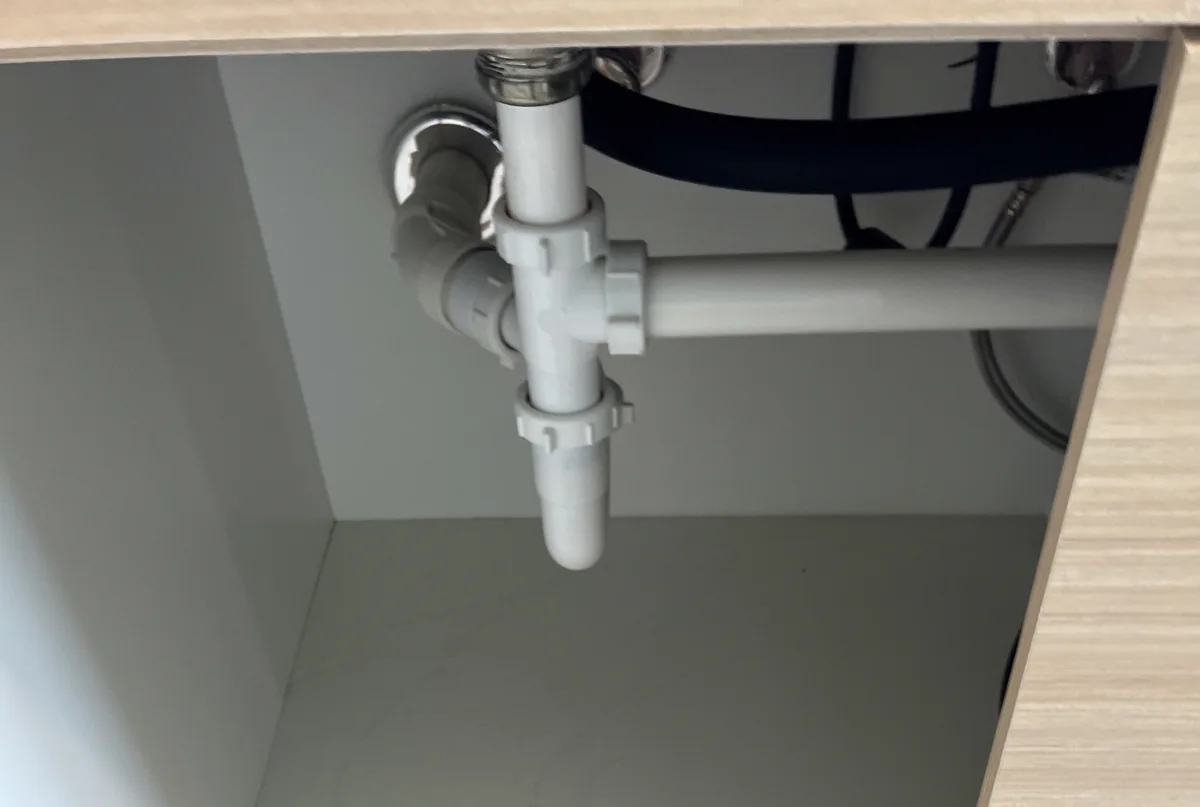

A pull-out can bring supplies at the back of a cabinet into reach. Separate bins can be easier to place beside awkward pipes, lift out and rearrange. Choose by the route your supplies need to take, then check the space the whole organizer occupies.
This comparison is for choosing between those two approaches. If you have not mapped the cabinet yet, start with the pipe-aware organization guide. A product photo, basket width or adjustable frame does not confirm a fit.
Choose the job before the organizer
Name the task that currently feels awkward: retrieving one bottle at the back, carrying supplies to another room, or clearing the floor to inspect plumbing. These are different jobs. A sliding basket may help with the first while a handled bin helps with the second.
Consider how you use the cabinet, rather than how many tiers an organizer offers. A second level is useful only if you can reach both levels and the intended contents fit beneath the pipes.
| Your main need | Pull-out storage | Separate removable bins |
|---|---|---|
| Reach supplies stored at the back | Worth checking if a clear, straight sliding route is available. | Keep the daily group forward; deep bins can still hide items. |
| Carry a group to another room | Check whether the basket or caddy is removable. | A stable handled bin can travel with the group. |
| Work around pipes or a center support | The full frame and moving basket need compatible space. | Independent narrow groups can use separate clear areas. |
| Keep installation reversible | Check the exact mounting method and rental permission. | A freestanding bin avoids fasteners; still test removal. |
| Inspect the floor and reach valves | Check the access left with the frame installed. | Check that each loaded bin can move out without a chain of rearranging. |
Separate the footprint, opening and movement checks
First, check the full stationary footprint. Include the frame, runners, handles and mounting position, not just the usable basket. Compare it with a clear area at the relevant height; a pipe above the floor can still obstruct tall bottles.
Second, check the passage through the open door. Hinges, a face frame, a center support and the door angle can make it narrower than the interior. Rev-A-Shelf asks customers to measure the cabinet opening and account for obstructions such as plumbing and hinges. Match the exact model to your cabinet construction.
Third, check movement. A loose bin needs a usable loaded removal path. A pull-out needs its specified extension space and a route that clears the door and plumbing. Read the exact installation instructions and minimum-opening requirements before deciding. Do not assume the label on a size option describes every external dimension.
Rev-A-Shelf: measure the cabinet opening and obstructions · Follow the full measurement method · Compare your organizer dimensions
A worked example: room inside does not prove removal
All measurements below are fictional. They explain a decision, not a tested cabinet or product recommendation. Imagine a clear bay 11 inches wide, 16 inches deep and 14 inches high. Its door opening is 9 inches wide and 13 inches high, with 18 inches of clear space in front.
For this example, bins must come out upright and straight because that is how the user intends to handle the loaded group. Tilting, rotating or emptying them is not part of the chosen routine.
- Do not copy these numbers as shopping sizes or recommended clearances.
- If your plan allows angled removal, trial that movement with the intended contents instead of treating a simple width comparison as a universal answer.
| Fictional candidate | Static fit | Passage or travel | Decision |
|---|---|---|---|
| Wide bin: 10 × 14 inches; loaded height 12 inches | Within the 11 × 16 × 14-inch bay. | Its 10-inch width exceeds the 9-inch opening for straight upright removal. | Reject for this routine. Interior fit alone is insufficient. |
| Narrow bin: 8 × 14 inches; loaded height 12 inches | Within the stated clear bay. | The stated width and height are below the opening dimensions. | Keep for a physical trial; grip space and actual obstacles still matter. |
| Pull-out: 8-inch basket; full unit 10.5 × 17 inches; assumed required front clearance 19 inches | Its full depth exceeds the 16-inch bay. | The assumed travel clearance exceeds the 18 inches available. | Reject this candidate despite the narrower basket. |
Make a trial that exposes the awkward part
Use paper or cardboard to mark the full proposed footprint, including the space a handle or frame needs. A flat outline reveals obvious overlaps; it cannot test height, weight, stability or loaded removal.
Next, try an existing container with a similar overall shape, if you have one. Put in the intended items, close the doors and retrieve the group using your normal movement. For a possible pull-out, mark its travel on the floor and check the door position. This is a planning check, not an installation test.
Keep valves reachable without turning them and do not move plumbing to accommodate storage. If the cabinet is damp, resolve that problem first; EPA advises renters to report plumbing leaks and moisture problems promptly.
Write a purchase brief, or keep the bins you have
Record the job, usable bay, door passage, loaded height, movement space and permitted mounting method. Compare those requirements with the exact product specifications, instructions and load limit. Missing dimensions are a reason to ask the manufacturer, not fill in a guess.
A useful decision can be to buy nothing: keep a daily bin at the front and move occasional supplies elsewhere. If both approaches pass a realistic trial, choose the one you can return to its place without rebuilding the cabinet.
Get the free under-sink measurement worksheet · Preview the Under-Sink Fit Kit and its worked planning pages
Common questions
Is pull-out storage always better than bins?
It solves a different job. Check a pull-out when rear access is the problem and a clear sliding route exists. Check removable bins when you need separate groups, portability or a layout around obstructions.
Can a bin fit inside but still be the wrong size?
Yes. Compare the interior with the opening and your intended removal movement. A group that only comes out after you empty or tilt it may not suit your routine.
What should I do when a listing gives only basket dimensions?
Look for the full installed dimensions, minimum opening and movement requirements for that exact model. Ask the manufacturer for missing information before buying.
Sources & further reading
The linked sources support care, safety or measurement guidance. Suggested routines and planning examples are editorial guidance, rather than product tests.